Seed to Sip: The Craft Breweries Growing Their Own and Changing What Beer Can Be
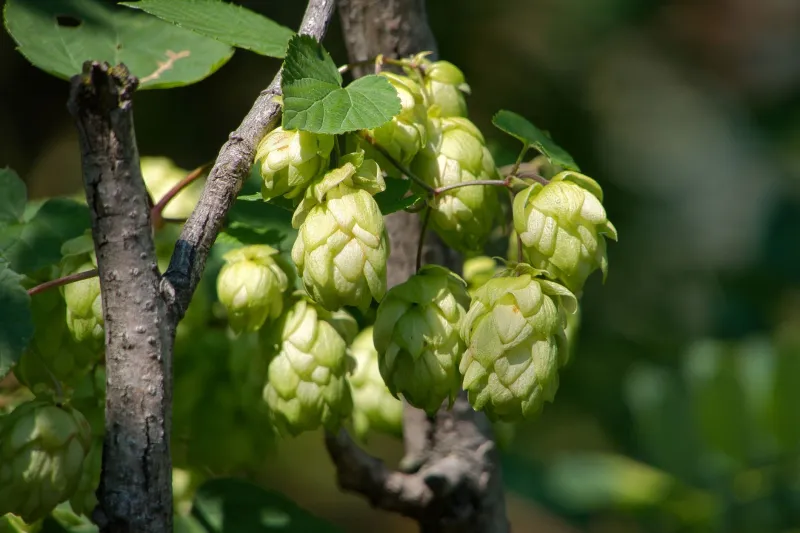
On a Tuesday morning in late August, the head brewer at a small urban operation in Portland is standing on the roof of his brewery in rubber boots, pulling ripe hop cones off a trellis that runs the full length of the building. Below him, the city is waking up. Above him, the bines are heavy with Cascade and a proprietary hybrid he's been developing for three seasons. By Thursday, those hops will be in a kettle. By the following month, they'll be in your glass.
This is farm-to-glass brewing at its most literal — and it's happening in more places across America than you might expect.
What "Hyperlocal" Actually Means
The farm-to-table food movement has been a fixture of American dining culture for going on two decades now, but its brewing equivalent has been slower to develop. That's partly because beer has more moving parts than a plate of roasted vegetables. A truly hyperlocal beer requires not just local hops but local grain, local water chemistry, and ideally a house yeast strain that reflects the microbiology of a specific place. Achieving all of that simultaneously is genuinely difficult, and most breweries settle for doing one or two pieces well.
But a growing cohort of American craft brewers is pushing past "locally sourced" as a marketing claim toward something more serious: a full agricultural identity, where the brewery is inseparable from the land it sits on or near.
The results are beers that taste like actual places — not in a vague, poetic sense, but in a measurable, reproducible way that you can taste side by side against the same recipe made with commodity ingredients.
Rooftop Gardens and Vertical Farms
For urban breweries without access to surrounding farmland, the rooftop has become an unlikely solution. Several breweries in cities like Chicago, Denver, and Washington, D.C., have installed hop trellises, raised herb beds, and even small grain plots on their buildings — harvesting ingredients that feed directly into small-batch seasonal releases.
The yields from these urban grows are modest. A rooftop hop garden might produce enough for one or two batches per year, which makes the resulting beers genuinely rare. But that scarcity is part of the appeal, and the brewing process that comes out of it — working with exactly what the garden produces, adjusting recipes to match the harvest rather than the other way around — creates a creative constraint that brewers find surprisingly liberating.
"You're not chasing a spec sheet," explains one Chicago brewer who maintains a rooftop garden above her taproom. "You're working with what the season gave you. It changes how you think about every other beer you make."
Some breweries have taken the urban agriculture angle further, partnering with vertical farms and hydroponic operations to grow specialty herbs, botanicals, and even experimental grain varieties in controlled indoor environments. It's not traditional farming, but it produces ingredients with a specificity and traceability that no commodity supplier can match.
The Farm Breweries Taking It to Another Level
If rooftop gardens represent one end of the spectrum, farm breweries represent the other — and some of the most exciting examples are scattered across the American countryside in places that most beer travelers haven't discovered yet.
In the Finger Lakes region of New York, a handful of estate breweries have taken the winery model and applied it to beer, growing their own barley, wheat, and hops on surrounding acreage and producing beers that are expressions of a single farm's agricultural output in a given year. The concept borrows heavily from wine's appellation culture, and the beers carry that same vintage-to-vintage variability that makes wine drinking so endlessly interesting.
Out in the mid-Atlantic, a farm brewery in the Shenandoah Valley has gone even further, maintaining heritage grain varieties — including a pre-Prohibition six-row barley that nearly disappeared from American agriculture — and working with a local maltster to process their harvest on site. Their flagship farmhouse ale changes character every year depending on rainfall, soil conditions, and harvest timing. It's the same recipe, but it's never quite the same beer.
These aren't tourist traps or novelty operations. They're serious agricultural enterprises that happen to make exceptional beer.
The Challenges Nobody Puts in the Press Release
Let's be honest about something: growing your own brewing ingredients is hard. Hops are susceptible to a long list of pests and diseases. Grain farming requires equipment, expertise, and acreage that most small breweries don't have. Weather is unpredictable. Yields are never guaranteed. And the economics of farming at small scale are, to put it gently, brutal.
Breweries that have made this commitment describe a learning curve that takes years to climb. Early harvests are often disappointing — too small, too variable, or affected by growing conditions the brewer didn't anticipate. Building the agronomic knowledge required to grow quality brewing ingredients alongside the fermentation knowledge required to make quality beer is a genuinely enormous undertaking.
There's also a question of scalability. A brewery that grows its own hops for one annual release is doing something wonderful and interesting. A brewery that tries to grow all of its own ingredients year-round is fighting against some pretty fundamental economics. The sweet spot for most operations seems to be a hybrid model — commodity ingredients for core beers, estate-grown or locally-farmed ingredients for small-batch seasonals that command a premium price and carry the farm-to-glass story.
A Different Kind of Beer Travel
For beer travelers, the farm brewery movement is creating a genuinely new kind of destination — one that combines the pleasure of great craft beer with the experience of visiting a working agricultural landscape.
Showing up at a farm brewery during harvest season, watching the hops come off the bine and going into the kettle within hours, and then tasting the resulting wet-hop ale a few weeks later is about as close as most of us will ever get to understanding what beer actually is at its most fundamental level. It's a reminder that before beer was a culture, a business, or a lifestyle, it was agriculture.
That's a story worth traveling for — and a beer worth seeking out.