Digging Up the Dead: How Craft Brewers Are Resurrecting America's Forgotten Colonial Beers
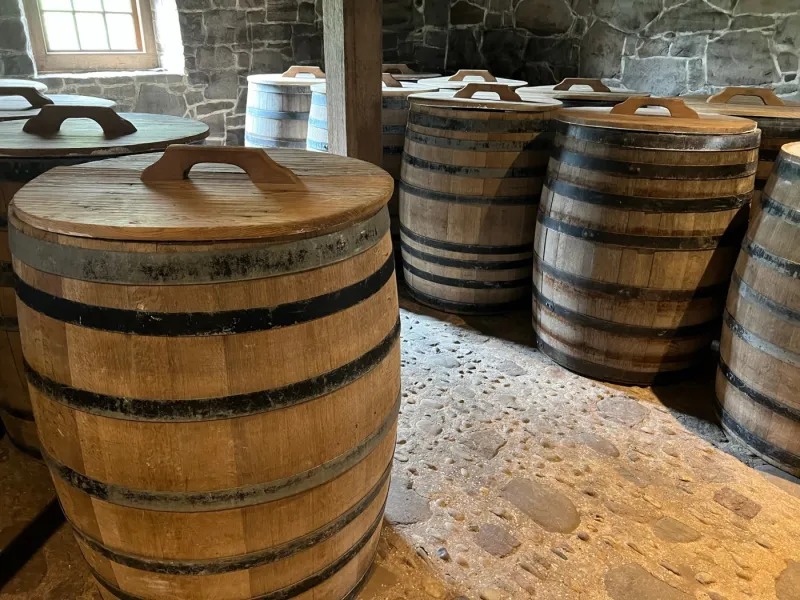
Photo: colonial American brewing historical beer barrels old brewery, via i0.wp.com
There's a certain kind of craft brewer who isn't satisfied just making great beer. They want to make old beer — and we're not talking about a dusty six-pack in the back of someone's fridge. We're talking about ales that George Washington might have knocked back after a long day at Mount Vernon, or the spruce-forward brews that kept Revolutionary War soldiers warm during brutal winters at Valley Forge.
This is the world of historical beer revival, and it's one of the most fascinating — and frankly nerdy — corners of American craft brewing right now.
The Archive Is the Brewery
For most brewers, recipe development starts with a whiteboard and a bag of hops. For the folks in the historical revival movement, it starts in a library. Or a digitized colonial newspaper archive. Or sometimes a private collection of handwritten household ledgers from the 1700s.
The detective work involved is genuinely intense. Colonial-era recipes — when they exist at all — are maddeningly vague by modern brewing standards. Measurements were often written in terms like "a good handful" or "until it smells right." Ingredients were regional and seasonal, meaning a brewer in Virginia wasn't working with the same raw materials as one in Massachusetts. And the malting and fermentation techniques of the era bear almost no resemblance to what you'd find in a 21st-century brewhouse.
That's what makes this pursuit so compelling. It's less about following a formula and more about building one from scratch using fragmentary evidence — like a historian reconstructing a battle using only a handful of letters and a worn-out map.
"You have to become part brewer, part historian, and part translator," says one East Coast heritage brewer who's been recreating pre-Prohibition American styles for nearly a decade. "The recipe might say 'molasses and dried corn,' but what kind of molasses? From where? How refined? Every ingredient had regional variation, and that variation mattered enormously to the final product."
What Were Colonial Americans Actually Drinking?
Here's where things get genuinely interesting — and where a lot of modern beer drinkers are in for a surprise.
Pre-industrial American beer was almost nothing like what we associate with the word today. Hops were used, sure, but they were expensive and not always available in every region. Brewers leaned heavily on whatever was local and abundant: spruce tips in New England, persimmons in the mid-Atlantic South, pumpkin and squash in early colonial settlements, and molasses almost everywhere, since it was a common byproduct of the Caribbean sugar trade.
The result was a wildly diverse beer landscape that modern drinkers would barely recognize. Many colonial ales were low in alcohol by today's standards, designed more for daily hydration than recreation — water quality being what it was. Others, particularly the stronger "October beers" brewed in fall and cellared through winter, were robust and complex in ways that would impress even the most seasoned craft beer enthusiast.
Spruce beer deserves special mention here because it keeps popping up in historical records and it's one of the styles that contemporary brewers have had the most fun recreating. Spruce tips, harvested in spring when they're young and resinous, lend a piney, citrusy, almost gin-like quality to beer that's genuinely unlike anything in the modern craft canon. Once you taste a well-made spruce ale, it's not hard to understand why it was a staple for centuries.
The Translation Problem
Even when a historical recipe is relatively detailed, turning it into a drinkable modern beer isn't straightforward. Ingredients have changed. Heirloom grain varieties that colonial brewers took for granted are often extinct or extremely difficult to source. Yeast strains from that era are long gone — though a small number of labs and breweries are working to cultivate period-appropriate wild strains from old fermentation vessels and historical sites, which is either brilliant or slightly unhinged depending on your perspective.
Then there's the question of palate calibration. Modern American beer drinkers have expectations — even adventurous craft beer fans have a baseline sense of what beer should taste like. Some colonial styles are genuinely challenging by those standards: tart, lightly sour, thin-bodied, or flavored with ingredients that read more like a kitchen spice rack than a hop bill.
The brewers doing this work have to make judgment calls about how faithful to be. Go too authentic and you risk putting out something that alienates everyone but the most hardcore history buffs. Compromise too much and you've just made a novelty beer with a historical label slapped on it.
"We try to honor the spirit of the original while acknowledging that we're brewing for people in 2024, not 1774," explains a brewer from a mid-Atlantic heritage operation that's become well-known for its colonial-era recreation series. "It's not a museum piece. It has to be something people actually want to drink."
Why This Matters Beyond the Novelty Factor
It's easy to frame historical beer revival as a quirky niche — and in terms of raw market share, it absolutely is. But the movement carries real significance for the broader craft beer world.
For one thing, it's a powerful argument for ingredient diversity. Colonial American brewing was radically local by necessity, and the regional flavor profiles that resulted were genuine expressions of place. At a time when a lot of craft beer has started to feel homogenous — everyone chasing the same hazy IPA or the same pastry stout — the historical revival scene is a reminder that beer's flavor possibilities are almost limitless.
It's also a corrective to the popular mythology that American beer has always been bland. Long before Prohibition flattened the landscape and the big industrial lagers took over, this country had a genuinely wild and varied beer culture. Knowing that history doesn't just satisfy academic curiosity — it gives modern brewers permission to be weirder, bolder, and more rooted in place.
And frankly, there's something that resonates with the Battlefield Brewworks ethos here: the idea that great stories and great beer are inseparable. Every bottle in a historical revival series comes loaded with narrative — the story of a country figuring out who it was, one fermentation vessel at a time.
Where to Find These Beers
Historical revival beers aren't always easy to track down, which is part of their charm. A handful of breweries across the country have made colonial and pre-Prohibition recreation a core part of their identity, particularly in the Northeast and mid-Atlantic, where the historical connection to early American brewing is strongest.
Beyond dedicated heritage operations, keep an eye on limited seasonal releases from adventurous craft breweries in your area. Spruce beers tend to show up in spring. Pumpkin and persimmon ales make appearances in fall. Molasses porters are a winter staple for a growing number of historical-minded brewers.
If you're at a taproom and you see something on the menu described as a "historic recreation" or "colonial style," order it. Even if it's not your usual go-to, it's a conversation — a direct line back to the people who were figuring out American beer before there was even an America to speak of.
That's worth a pint by any measure.