Pucker Up, America: How Sour Beers Became the Craft World's Best Recruiter
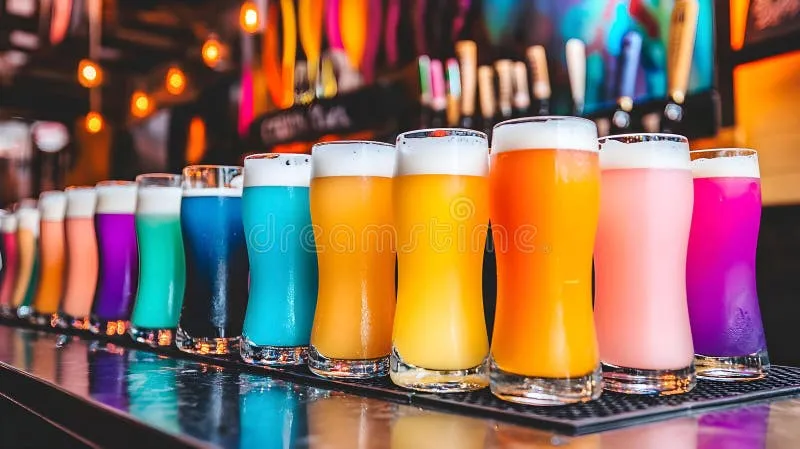
Photo: colorful sour beer flight taproom craft brewery, via thumbs.dreamstime.com
There's a moment that bartenders across the country have started recognizing. A customer walks in, orders whatever domestic light beer is on the cheapest draft, and then — out of curiosity or maybe a dare — takes a sip of someone else's Berliner Weisse. Their face does that thing. The scrunch. The pause. And then, almost without fail, they say some version of: *"Wait. What is that?"
That moment, repeated thousands of times a week in taprooms from Portland, Oregon to Portland, Maine, is quietly reshaping American drinking culture. Sour beer — once the province of Belgian monastery traditions and American craft obsessives willing to pay $25 for a 750ml bottle — has become the unlikely gateway drug of the craft beer world.
From Funky Fringe to Front of the Menu
Not long ago, most taprooms treated their sour offerings like a hidden gem. You had to know to ask. They sat at the end of the menu, described in terms that sounded vaguely alarming — wild fermentation, Brettanomyces, spontaneous — and they were priced accordingly.
That's changed in a pretty dramatic way. According to data from the Brewers Association, sour and wild ale production has grown steadily over the past decade, and anecdotally, brewers will tell you these styles now move faster than almost anything else on a warm afternoon.
"We used to brew one sour a quarter and consider it a special release," says Marcus Delgado, head brewer at a mid-sized taproom in Denver. "Now we've got four on tap at any given time, and they're consistently our top sellers from April through September. The people buying them aren't all beer nerds. A lot of them are people who told me they don't even really like beer."
That last part is the key detail. Sour beers aren't just converting existing craft drinkers to a new style. They're pulling in people who had previously written off beer entirely.
Why Tart Works Where Bitter Doesn't
The craft beer world spent a long time leading with hops. IPAs became the face of the movement, and for good reason — they're complex, they're bold, and they've built a massive following. But they're also intensely bitter, and bitterness is genuinely polarizing. A lot of people, particularly those coming from light lager backgrounds or wine and cocktail cultures, find that bitterness off-putting rather than inviting.
Sourness is a different sensory experience entirely. It's sharp and bright rather than lingering and dry. It triggers associations with lemonade, fruit, yogurt — things that feel refreshing and familiar even when the flavor profile is totally new.
"Sour is approachable in a way that a 70 IBU double IPA just isn't," says Jamie Kowalski, a bartender at a craft-focused bar in Chicago's Logan Square neighborhood. "When I hand someone a Gose or a fruit Berliner, they almost always finish it. That's not always true with a big hop-forward beer. And once someone finishes something and enjoys it, they come back."
Jamie's observation points to something important: completion matters. A beer someone doesn't finish doesn't build a new fan. A beer that surprises someone in a good way does.
The Fruit Factor
It would be dishonest to talk about the sour revolution without acknowledging the role of fruit. Modern American sour production has leaned heavily into fruit additions — raspberry, passionfruit, mango, blood orange, and just about every berry imaginable. Critics sometimes dismiss these as "dessert beers" or question whether they represent serious brewing.
But the brewers making them tend to be unapologetic, and for good reason.
"I get the purist argument, but I also watch people who've never cared about beer light up when they try a blueberry Berliner," says Tanya Osei, co-owner of a small sour-focused brewery in Asheville, North Carolina. "If that's the door that gets them into craft beer, I'm happy to be the one who built it. They're going to keep exploring from there."
Tanya's point about exploration is borne out by what bartenders see in practice. The customer who starts with a passionfruit Gose in June often comes back in October asking about barrel-aged stouts. The palate, once opened, tends to keep opening.
What This Means for Craft Beer's Future
The rise of sour beer as a gateway style has some interesting implications for where American craft is headed. For one, it's accelerating experimentation. When breweries see that consumers are willing — even eager — to try something genuinely unfamiliar, it gives them permission to push further.
It's also creating a more diverse drinking culture. Sour beers have found enthusiastic audiences among wine drinkers, cocktail lovers, and people who identify as non-beer-drinkers, which expands the tent considerably. Craft beer has sometimes struggled with a perception problem — seen as a hobby for a particular demographic. Sour beers seem to cut across those lines more effectively than most styles.
There are challenges, too. Sour production is genuinely harder than brewing a clean lager or a straightforward pale ale. Wild fermentation is unpredictable. Barrel programs require significant space and capital. Consistency — something consumers increasingly expect — is difficult to achieve when you're working with living cultures that don't always follow a script.
"You're never fully in control," admits Marcus Delgado. "Sometimes that's frustrating. But sometimes that's exactly what makes a batch special. The best sours I've ever brewed had an element of surprise in them."
The Convert's Testimony
Ask anyone in a taproom on a Friday afternoon how they got into craft beer, and increasingly, the answer involves something tart. A friend's recommendation. A sample at a festival. A curious sip from someone else's glass.
Rachel Torres, a 34-year-old graphic designer from Austin, Texas, tells a story that's become almost archetypal. "I was a White Claw person. I liked something cold and fizzy and not too heavy. My boyfriend kept dragging me to breweries and I'd always just get a cider. Then one day I tried a watermelon Gose and I genuinely couldn't believe it was beer. Now I probably know more about sour styles than he does."
That's the sour revolution in miniature. It doesn't announce itself with manifestos or medal ceremonies. It works one converted drinker at a time, one puckered-up, surprised, delighted face at a time.
And if the craft beer world is looking for its next decade of growth, it might just be hiding in a barrel, quietly going funky.